The Body Modification Shift: How Floating Navel Jewelry Became the 2026 Industry Standard
 By Elena Rostova
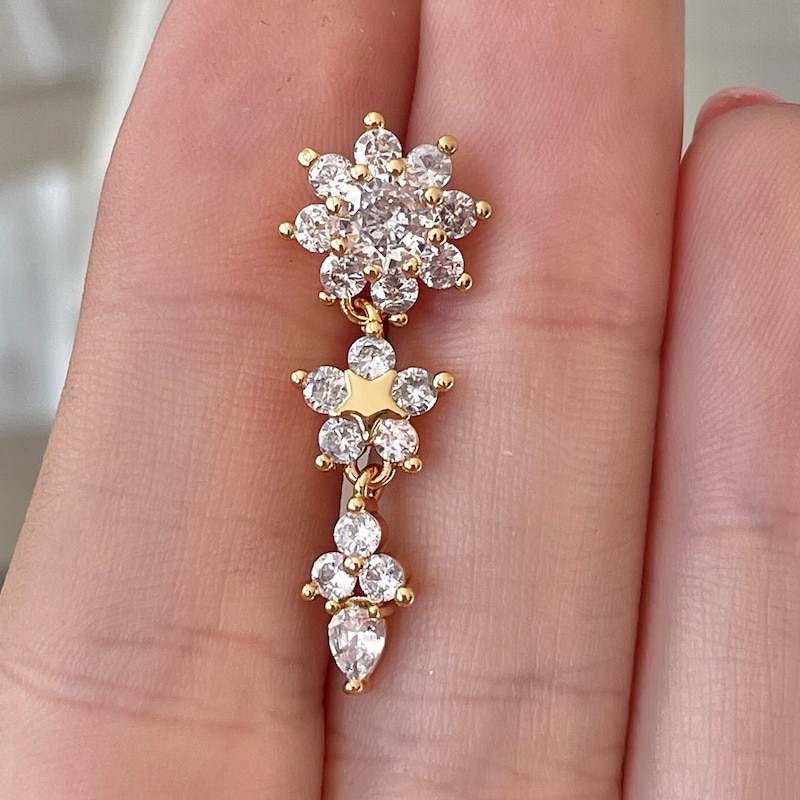
To understand why the old model failed so frequently, one must examine the abdomen in motion. Traditional navel jewelry was designed around an idealized posture: standing upright with abdominal wall tension engaged. In this static posture, a 6mm to 8mm bottom crystal hangs cleanly within the navel shelf. Life, however, happens in flexion.
When an individual sits, drives, or ties their shoes, the intra-abdominal wall contracts and the surrounding flesh folds inward. For individuals with collapsing navel anatomy, the upper and lower ridges of the navel compress together, forming a horizontal slit. A large bottom bead trapped inside that closing seam acts as a wedge. Every time the abdomen folds, that wedge acts as a lever against the healing piercing channel.
This persistent physical interference produces immediate warning signals. Clients routinely mistake the resulting red, fluid-filled bump for an infection when it is almost always a mechanical healing irritation bump. Subjected to daily mechanical strain, the body attempts to expel the foreign object. The tissue channel thins, the barbell angles sideways, and the piercing marches steadily toward the surface of the skin until it rejects entirely, leaving behind a cleft of fibrous scar tissue.
Elena Rostova holds a Master's degree in Public Health Journalism. She covers groundbreaking medical research, holistic wellness trends, mental health awareness, and nutritional science.
