Why Does Hawaii's State Fish Oink? How to Say Humuhumunukunukuāpuaʻa
 By Alexander Ross
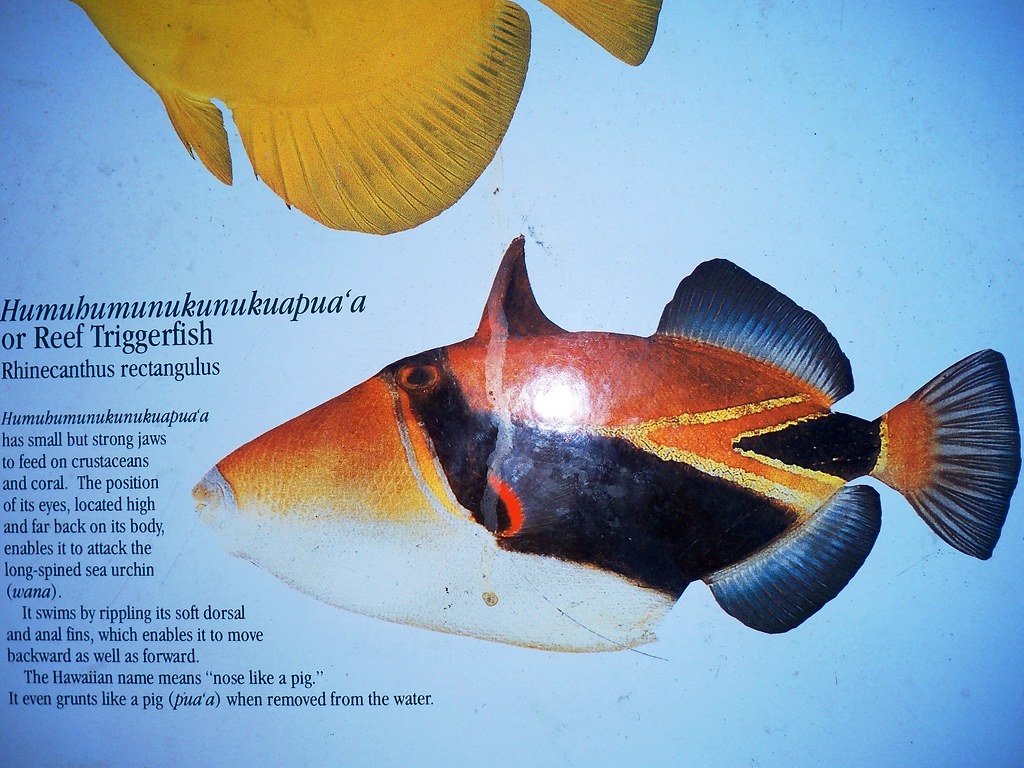
Why does a ten-inch reef dweller sound like a barnyard mammal? The noise serves a concrete evolutionary function: predator deterrence and territorial demarcation.
Reef triggerfish spend their days grazing in shallow outer reef flats, scouring coral rubble for crustaceans, brittle stars, and sea urchins. They are fiercely solitary animals. When another creature enters their feeding zone, or when a diver corners them against a reef shelf, the fish deploys acoustic defenses.
Biologists have traced this sound to two complementary anatomical actions:
- Pharyngeal Stridulation: The fish grinds specialized teeth inside its throat together, producing sharp, click-like frequencies.
- Swim Bladder Resonance: Specialized sonic muscles contract rapidly, causing the pectoral fins to vibrate against the lateral walls of the swim bladder. The air-filled bladder functions like a natural amplifier drum, converting the mechanical vibrations into deep, low-frequency grunts.
The resulting sound travels remarkably well through seawater. Snorkelers near shallow reefs often hear the muffled, rhythmic thumping before they spot the fish itself. When caught on a line or netted, the vibrations become intense enough that handlers can feel the animal shuddering in their palms as it protests.
Alexander Ross has covered the video game industry for a decade, writing deep dives on game design, esports tournaments, VR developments, and gaming culture.
