Was Jesus Really a Carpenter? the Surprising Greek Meaning Behind His Biblical Trade
 By Elena Rostova
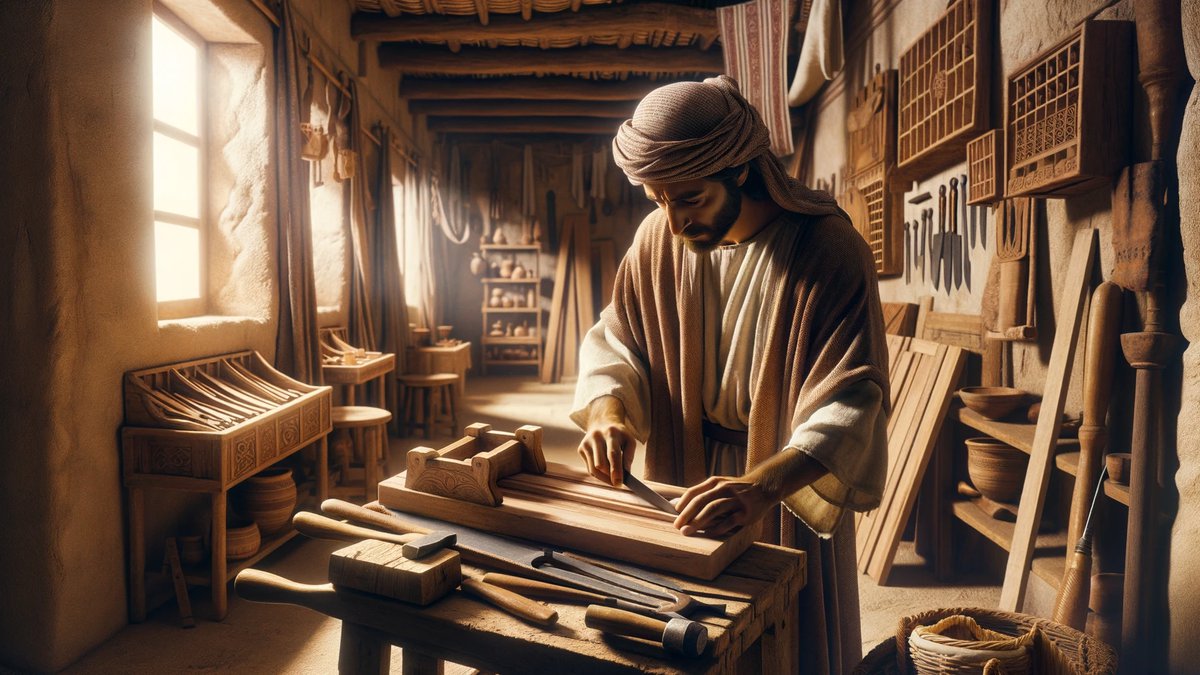
The New Testament references Jesus's secular occupation only once directly. In Mark 6:3, shocked neighbors in his hometown ask, "Is not this the tekton, the son of Mary?" A companion passage in Matthew 13:55 refers to him as "the son of the tekton." When Latin translator Jerome produced the Vulgate in the fourth century, he translated the Greek word into faber, an umbrella noun designating any craftsman, blacksmith, or manual worker who fashioned hard materials.
By the time William Tyndale published his English New Testament in 1526, followed by the King James Bible in 1611, European builders worked predominantly with oak, pine, and ash. Translators adopted the Old French loan word carpentier, derived from the Latin carpentum (a two-wheeled carriage or wagon). Over time, English vernacular narrowed the definition of "carpenter" to someone who works exclusively with wood. That linguistic choice locked subsequent generations into a mental image detached from the Mediterranean basin.
Classical Greek literature uses tekton for anyone who constructs large-scale physical structures. Homer applied the word to cart-makers, shipwrights, and house builders. In the Septuagint, the ancient Greek translation of the Hebrew Bible, the term translates the Hebrew root kharash, designating an artisan capable of cutting stone, carving timber, or smelting metal. A first-century tekton was an all-around builder.
Elena Rostova holds a Master's degree in Public Health Journalism. She covers groundbreaking medical research, holistic wellness trends, mental health awareness, and nutritional science.
