Visual Differences: How to Instantly Tell Decorticate from Decerebrate Posturing
 By Sarah Jenkins
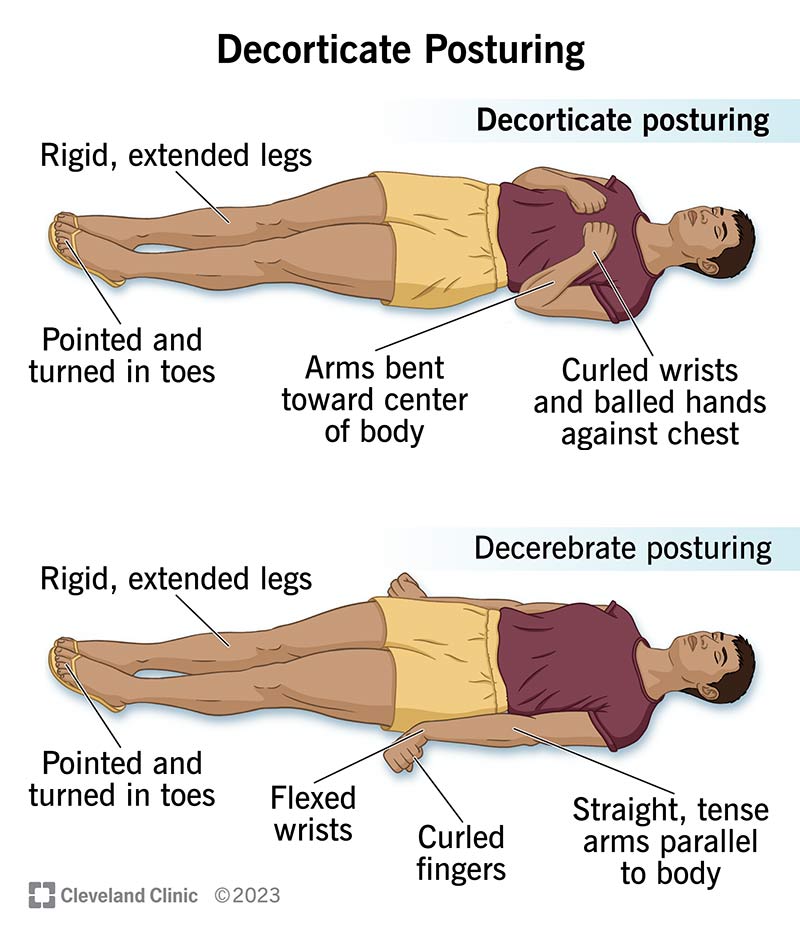
The visual distinction between decorticate and decerebrate posturing comes down to the upper extremities. In decorticate posturing (abnormal flexion), the patient's arms pull inward toward the core of the body. The elbows flex tightly, wrists curl downward, and fingers clench into rigid fists held flat against the chest. The lower extremities show rigid extension: legs straighten completely, feet turn inward, and toes point downward into extreme plantar flexion. Bedside teams use the mnemonic "decorticate brings arms to the core" to identify this pattern within seconds of a noxious stimulus.
Decerebrate posturing (abnormal extension) exhibits the opposite arm behavior. Instead of flexing upward, the upper limbs extend straight down along the torso. Shoulders adduct and rotate internally, while the forearms forcefully pronate so the palms and curled wrists point outward, away from the hips. The lower limbs mirror the decorticate presentation with rigid extension and equinovarus foot positioning. Decerebrate posturing reflects a more profound level of functional trans-tentorial herniation. Seeing a patient transition from flexion to extension indicates downward progression through the brainstem.
Sarah Jenkins is a veteran tech journalist with over 12 years of experience covering artificial intelligence, mobile innovations, and digital ethics. Her insights have appeared in leading technology publications worldwide.
