The Thread Count Myth: What Really Determines Quality in Seasonal Bedding
 By Sophia Al-Mansoor
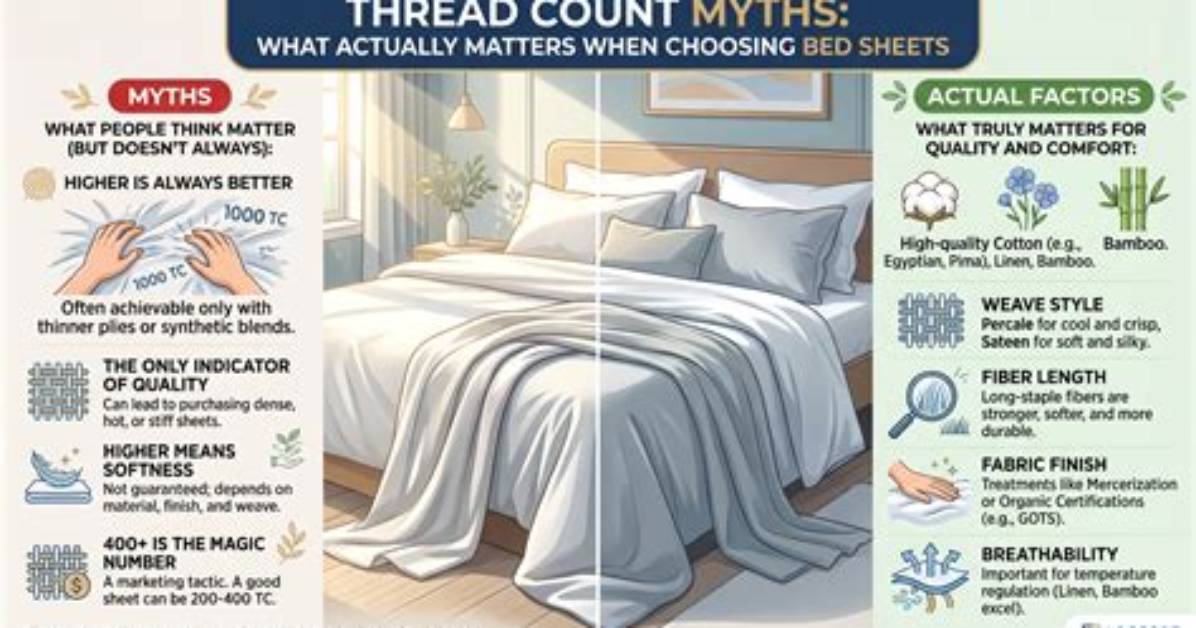
Winter warmth often pushes budget-conscious shoppers toward micro-flannel, coral fleece, and polyester blends. While these synthetics offer high initial softness at low cost, their molecular structure inhibits vapor transmission. Human bodies release roughly 0.5 to 1 liter of water vapor every night. Hydrophobic polyester fibers repel this moisture, trapping it under the covers and creating a humid, clammy sleeping climate that triggers midnight awakenings.
Natural plant and animal fibers deliver true thermal insulation through hydro-regulation:
Extra-long staple (ELS) cottons, such as authentic Giza Egyptian cotton or American Pima, feature staple lengths exceeding 1.38 inches. These longer individual strands yield smooth, fine yarns with minimal exposed fiber ends, preventing pilling while withstanding repeated laundering at high temperatures.
For winter, heavier natural fibers like brushed organic cotton, wool, and heavy linen absorb up to 20 percent of their weight in moisture before feeling damp. As the fabric absorbs moisture vapor, it releases subtle latent heat, buffering body temperature against room fluctuations. Investing in pure cotton or linen-cotton blends prevents the overheating cycle common with low-cost synthetic bedding collections.
Sophia analyzes international trade, startup ecosystems, retail transformation, and supply chain logistics for modern digital publications.
