The Forgotten Italian Journey: How Renaissance Frescoes Secretly Sparked Diego Rivera's Revolution
 By Sarah Jenkins
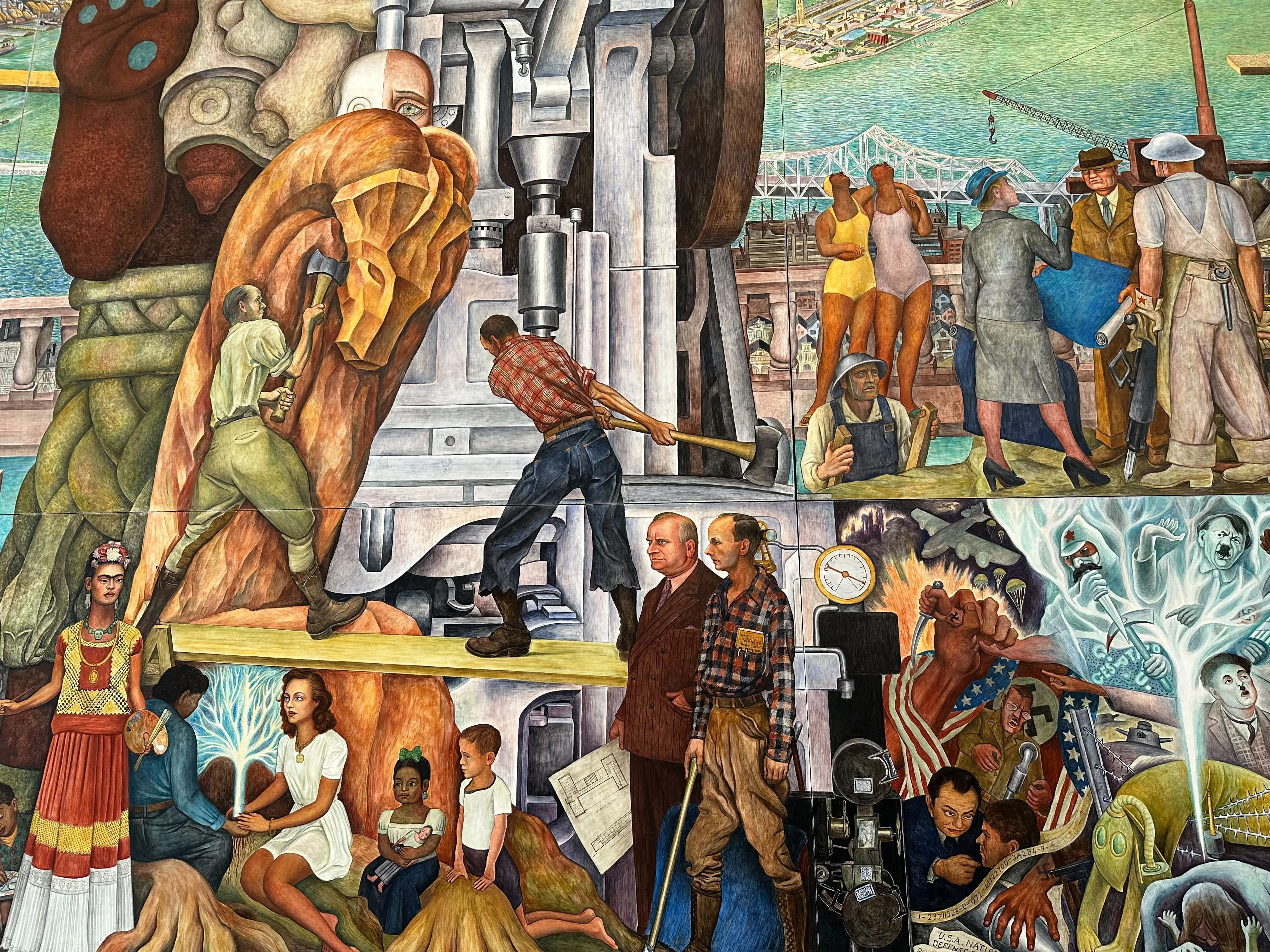
The Italian journey delivered more than philosophical inspiration; it provided a relentless technical education. Rivera obsessed over the buon fresco methodology, a physical process that had fallen out of widespread use in the industrialized West. Most late nineteenth-century decorators relied on fresco secco, applying pigment mixed with organic binders onto dried plaster, or glued massive painted canvases directly onto building walls. Both methods aged poorly in harsh climates.
Buon fresco demanded an exacting, unforgiving workflow. The artist applied pure mineral pigments suspended in distilled water onto an intonaco, a final, paper-thin coat of wet lime and sand plaster. As the plaster dried, an inescapable chemical reaction occurred: the slaked lime absorbed carbon dioxide from the surrounding air, transforming into calcium carbonate. The pigment became locked inside the crystalline structure of the stone wall itself.
This technical rigor forced Rivera to adopt the giornata system, where an artist paints only what can be completed in a single working day before the plaster sets, typically an eight to twelve-hour window. Errors could not simply be painted over; the spoiled plaster had to be chipped away with a cold chisel and laid fresh the following morning. The discipline demanded surgical clarity of line, swift brushwork, and meticulous planning via full-scale preparatory drawings, known as cartoons.
Giotto and Masaccio provided the compositional manuals. Rivera copied the weighty, sculptural figures of Masaccio’s Brancacci Chapel in Florence, noticing how heavy drapery gave ordinary human bodies dramatic gravitas. He absorbed the mathematical perspective of Paolo Uccello and the spatial pacing of Piero della Francesca in Arezzo. By combining the physical durability of buon fresco with the spatial architecture of the Quattrocento, Rivera secured the vehicle he needed to carry twentieth-century ideological weight.
Sarah Jenkins is a veteran tech journalist with over 12 years of experience covering artificial intelligence, mobile innovations, and digital ethics. Her insights have appeared in leading technology publications worldwide.
