The Evolution of Memory Management Tools: from Os Utilities to Agentic Ai Layers
 By James H. Sterling
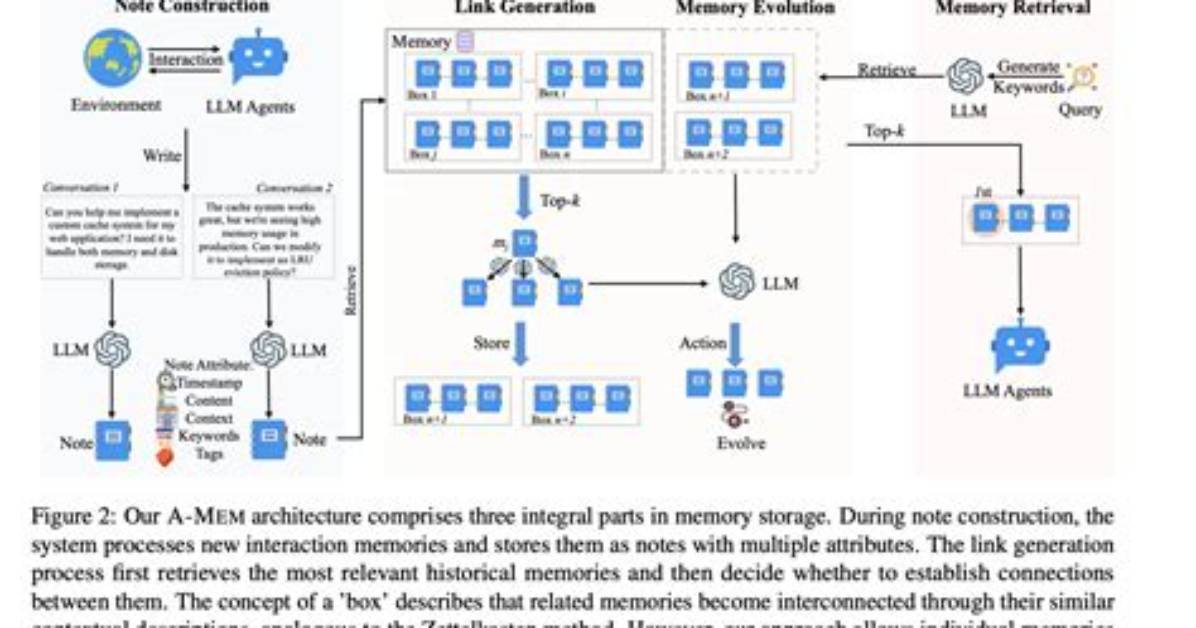
When autonomous agents execute complex multi-day workflows, simple FIFO (first-in, first-out) memory queues fail. Older system instructions get pushed out of the active context window, causing the agent to repeat completed actions or violate baseline project constraints. Resolving this requires long-term memory retrieval built on top of high-dimensional vector embeddings.
Vector database architecture approaches memory storage by converting text logs, code artifacts, and intermediate tool responses into mathematical coordinate vectors. By organizing these vectors through approximate nearest neighbor algorithms such as Hierarchical Navigable Small World graphs, systems can query millions of historical steps in milliseconds. The agent retrieves only the three or four most semantically relevant memories, injecting them into the working context strictly when needed.
Production systems rarely rely on raw vector similarity alone. Pure semantic distance matching frequently returns information that sounds conceptually related but lacks chronological relevance or specific factual accuracy. Modern memory orchestration platforms deploy hybrid search engines. These combine dense vector representations with traditional BM25 keyword matching and metadata filtering to ensure agents retrieve verified operational state rather than tangential conversational noise.
James Sterling reports on renewable energy developments, climate policy, ecological conservation, and green tech innovations around the globe.
