The Evolution of Creepy Phone Numbers: from Early Web Creepypastas to Modern Horror Marketing
 By Marcus Vance
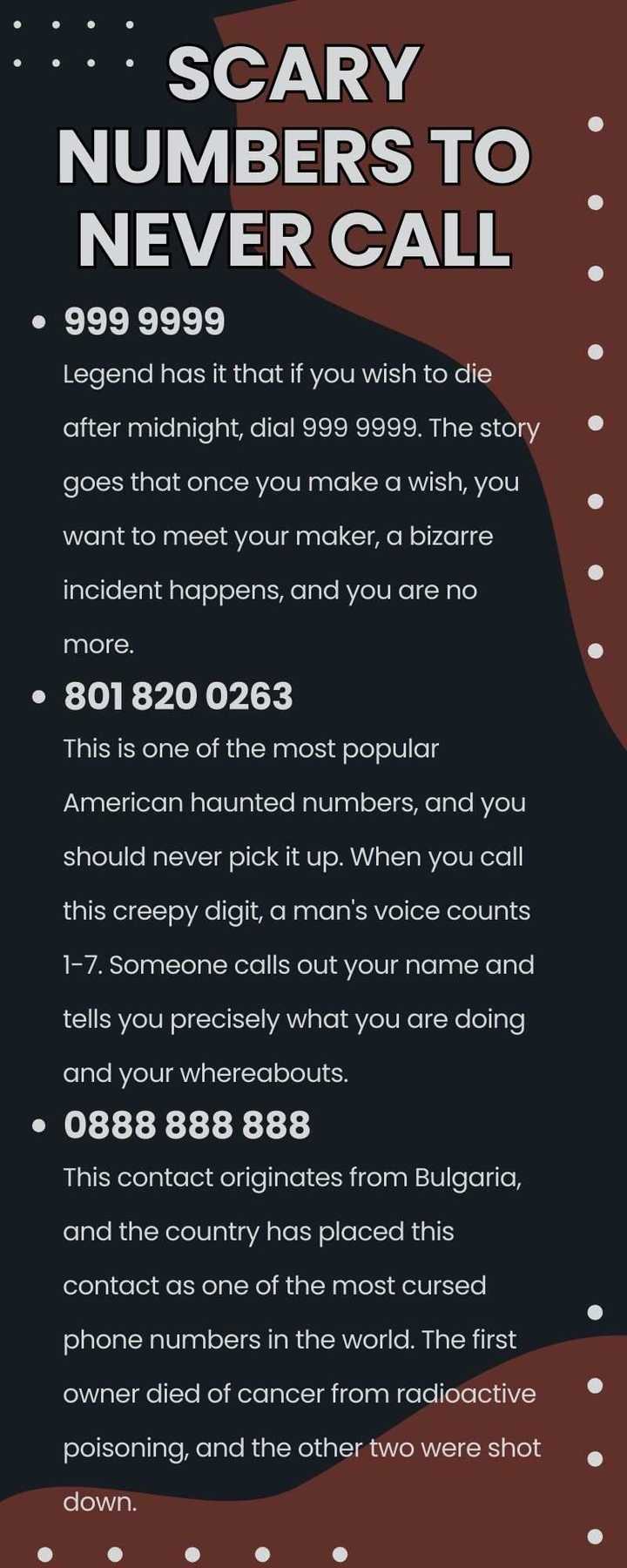
The massive cultural curiosity surrounding viral numbers has opened doors for opportunistic cybercriminals. When users search online forums or short-form video apps for lists of creepy numbers to call, they often stumble into deliberate traps designed to siphon cash or compromise mobile devices.
The most pervasive threat is international premium-rate fraud, commonly known as the Wangiri scam. Fraudsters lease high-cost overseas numbers in jurisdictions like the Caribbean or West Africa, masking them with area codes that look like domestic lines. When an unsuspecting user dials in hopes of hearing an urban legend or ghost recording, the line connects to an artificially delayed soundscape. Every minute spent listening to fake static adds exorbitant per-minute charges to the caller's mobile bill.
Malicious developers have taken the scheme a step further by publishing hundreds of counterfeit "Creepy Ghost Call" and "Paranormal Hotline" apps on digital storefronts. These apps harvest location data, request dangerous SMS and call-log permissions, and quietly register users for recurring premium services. Verifying the provenance of any public number, confirming it links to an official studio domain or verified production credit, remains essential before hitting dial.
Marcus Vance is a cybersecurity auditor and technology writer dedicated to educating the public about online safety, data privacy regulations, enterprise security, and emerging cyber threats.
