Perpendicular Vs. Parallel Lines: Debunking Common Slope Misconceptions
 By Maya Lin-Takahashi
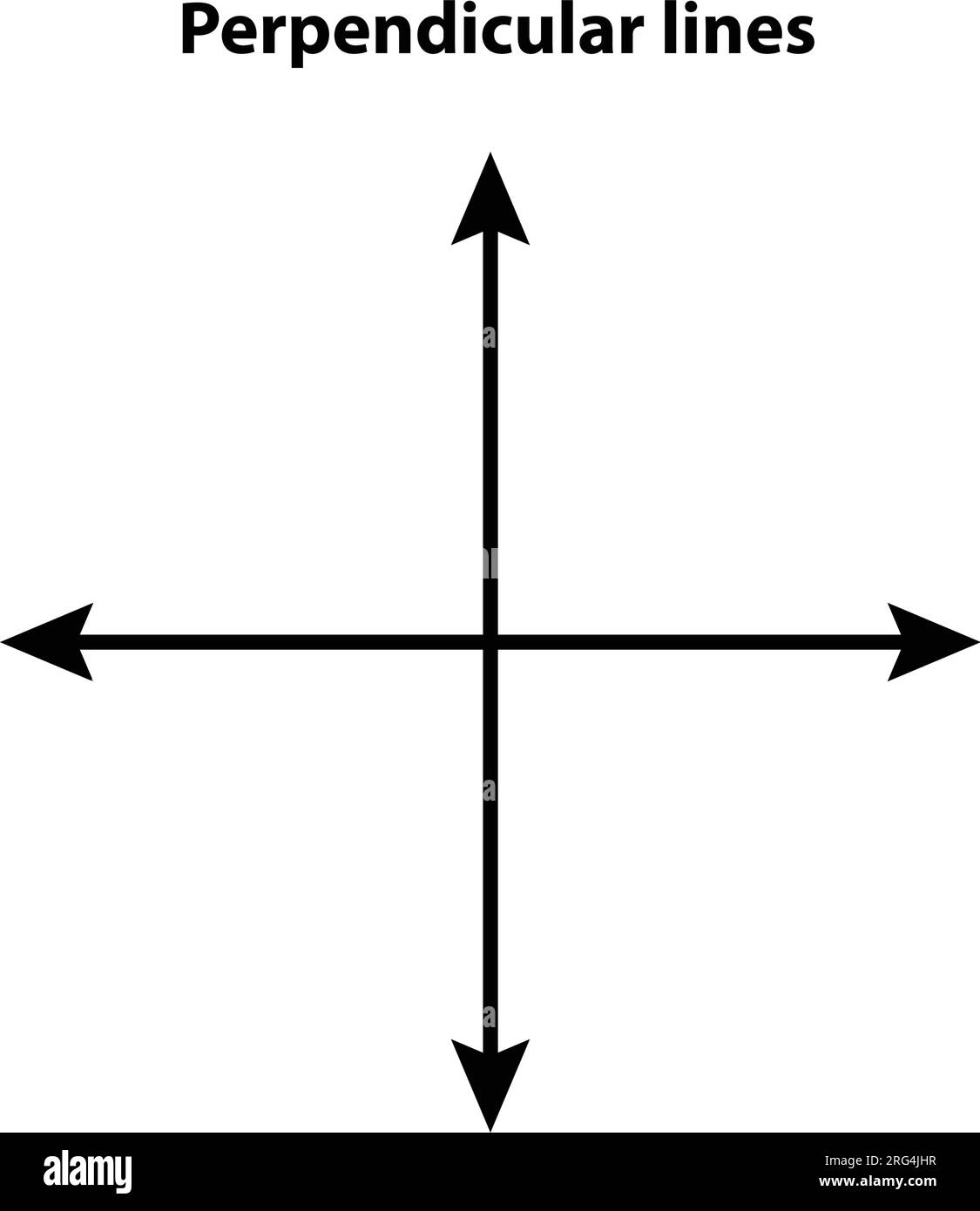
The standard m₁ × m₂ = -1 rule breaks down when a line runs parallel to an axis. Consider vertical and horizontal lines. A horizontal line maintains zero rise across infinite run, resulting in a slope of m = 0. Its algebraic equation takes the form y = c, such as y = 5.
If you attempt to calculate the negative reciprocal of zero algebraically, you encounter a division by zero: -1/0. Division by zero is undefined. Yet horizontal and vertical lines clearly intersect at right angles on a standard grid.
Vertical lines follow the equation x = k, such as x = -3. Their run is zero, producing an undefined slope. Because real-number arithmetic cannot multiply zero by an undefined value to equal negative one, mathematicians treat horizontal and vertical lines as an explicit coordinate exception. A horizontal line (y = c) and a vertical line (x = k) are perpendicular by definition.
Maya is a hardware enthusiast who tests and reviews smart home devices, smartphones, wearables, and audio gear. She focuses on practical consumer value and build quality.
