Permanent Standard Time Vs. Daylight Time: Which Policy Makes More Sense?
 By James H. Sterling
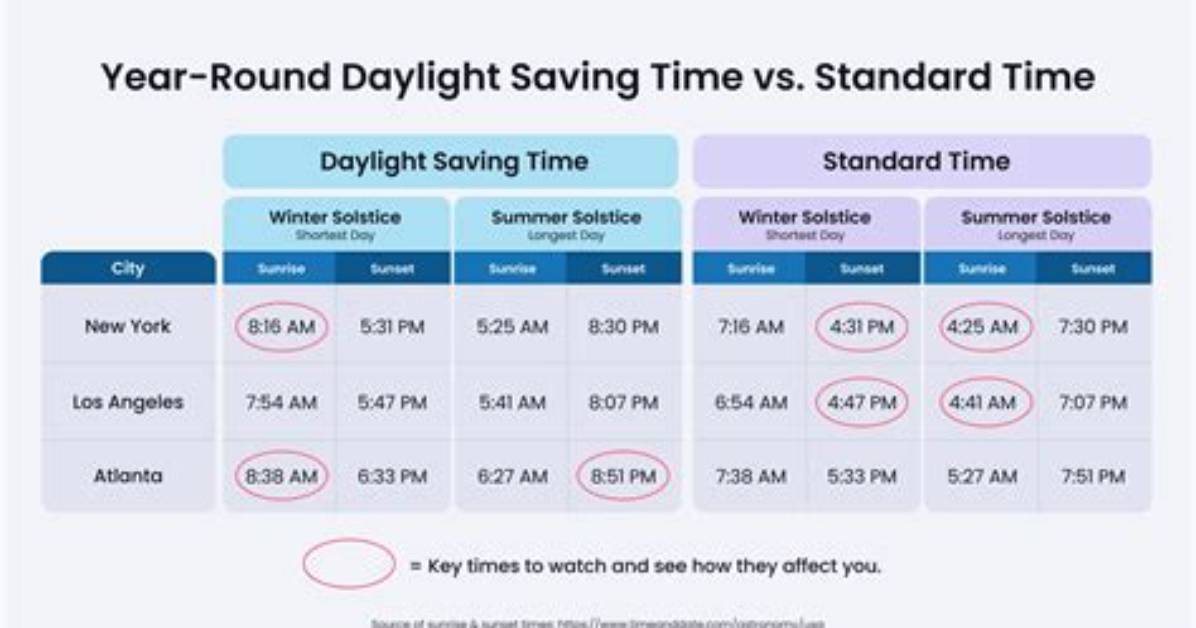
While the public imagines endless summer evenings, clinical medicine paints an entirely different picture. As reported by Medical Xpress, the broader community of chronobiologists and sleep medicine specialists almost universally favors permanent standard time over permanent daylight saving time.
The issue stems from circadian rhythm disruption. The human internal clock sets itself primarily by morning sunlight. Morning photons stimulate retinal ganglion cells, signaling the suprachiasmatic nucleus in the brain to halt melatonin production and release cortisol. When clocks shift forward, natural solar noon drifts an hour away from clock noon.
Dr. Phyllis Zee, director of the Center for Circadian and Sleep Medicine at Northwestern University, has repeatedly warned that chronic desynchronization between social clocks and sun time causes social jet lag. Forcing employees and children to wake up in pitch darkness while evening light delays biological sleep readiness shaves off 30 to 40 minutes of sleep every night for millions of people. Over months, this deficit elevates risks of cardiovascular events, metabolic syndrome, and clinical depression. Standard time keeps human biology closest to natural solar cycles.
James Sterling reports on renewable energy developments, climate policy, ecological conservation, and green tech innovations around the globe.
