Manji Vs. Hakenkreuz: the Visual Proof Behind Copy-Paste Symbol Confusion
 By Chloe Bennett
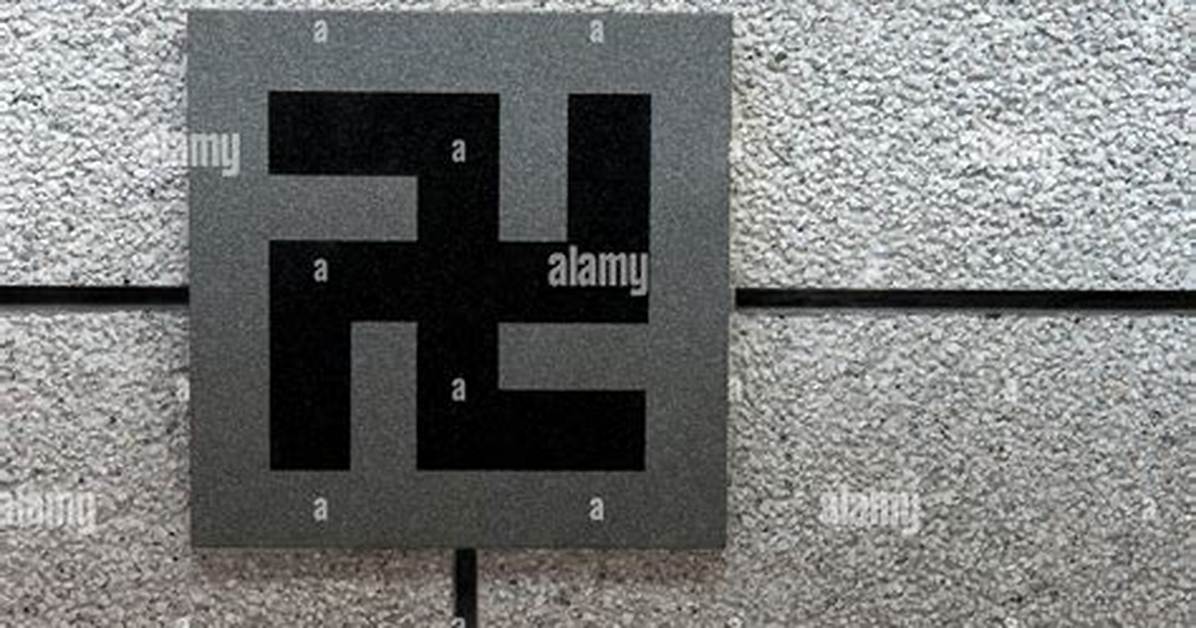
Long before Heinrich Schliemann excavated Troy and helped fuel German ethno-nationalist mythology, the cross with bent arms was revered across Eurasia. Sanskrit texts call it the svastika, deriving from su (good) and asti (to be), translating roughly to well-being or auspicious fortune. For sacred Asian faiths, including Hinduism, Buddhism, and Jainism, the geometric form spans more than 5,000 years of continuous devotional use. Jain temples paint it beside three dots representing right faith, knowledge, and conduct. Hindu shopkeepers in Mumbai and New Delhi paint it in red vermilion above shop lintels during Diwali.
Adolf Hitler repurposed the right-facing variant in 1920, christening it the Hakenkreuz (hooked cross) for the Nazi Party flag. He gave the emblem a distinct aesthetic rework. Instead of sitting square on a horizontal footing, the emblem was canted at a sharp 45-degree angle inside a white circle against a stark crimson field. That aesthetic distinction matters historically, but wartime devastation obliterated the nuance across Europe and North America. Following the Holocaust, the term "swastika" became synonymous in the West with racial violence, obscuring thousands of years of preceding ritual art.
In November 2022, an AP News investigation highlighted how a coalition of Hindu, Buddhist, and Jain organizations launched educational drives across North America to reclaim the emblem. Their central hurdle remains the linguistic conflation: Western education rarely teaches the German word Hakenkreuz, instead applying the Sanskrit word to Hitler's banner. As a result, when Asian diaspora communities display traditional decorations, neighbors and law enforcement frequently mistake devotional art for neo-Nazi provocation.
Chloe Bennett explores the intersection of pop culture, streaming entertainment, digital trends, and contemporary lifestyle. Her weekly commentary reaches thousands of culture enthusiasts.
