Inside a Real Bungee Fitness Class: What Actually Happens When You Strap In
 By Alexander Ross
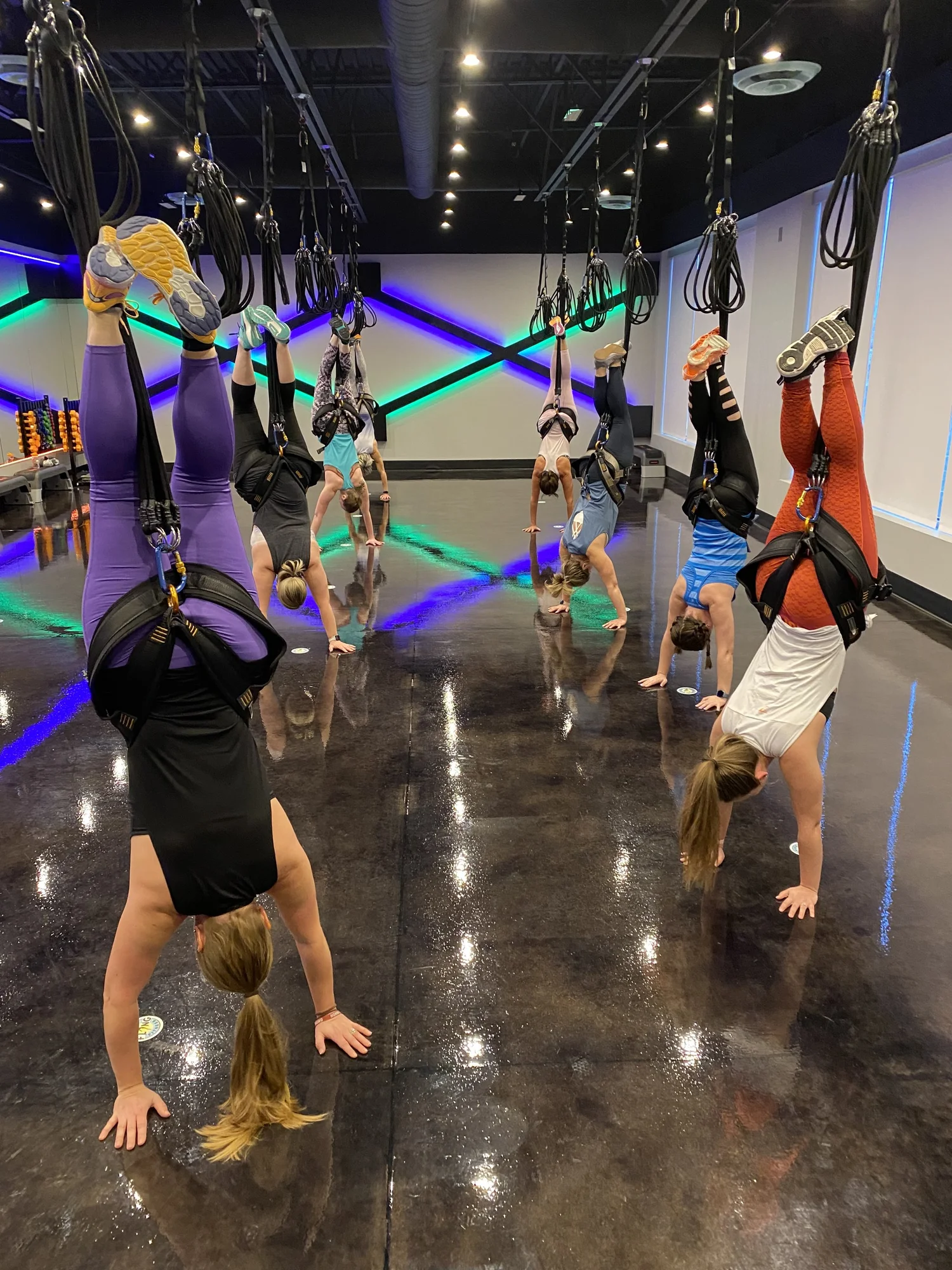
Stepping onto the studio floor requires leaving your vanity at the door. Harness fitting and setup is an exact mathematical process governed by weight, height, and mechanical load. Because standard bungees use a daisy-chain setup with multiple latex or rubberized shock cords, instructors calibrate the tension to each participant's specific body mass.
If the rig is calibrated too tightly for a light frame, you will spend the entire session suspended helplessly on your tiptoes, unable to plant your heels to initiate squats. If the cord lacks adequate tension for a heavier frame, the harness will not support your hips at the bottom of a drop, sending your knees directly into the floor.
Instructors cinch two primary leg loops around the upper thighs before tightening an oversized lumbar harness around the iliac crest. The setup mirrors mountaineering gear: heavy webbing, reinforced box-stitching, and locking steel carabiners rated to hold thousands of pounds. When you lean forward into an angle of 45 degrees, the tension catches you. For the first five minutes, your nervous system revolts against the instinct of falling forward, forcing your stabilizing muscles into overdrive to keep you upright.
Alexander Ross has covered the video game industry for a decade, writing deep dives on game design, esports tournaments, VR developments, and gaming culture.
