From 1789 Discovery to Modern Nuclear Accords: What Is Uranium's True Impact?
 By Marcus Vance
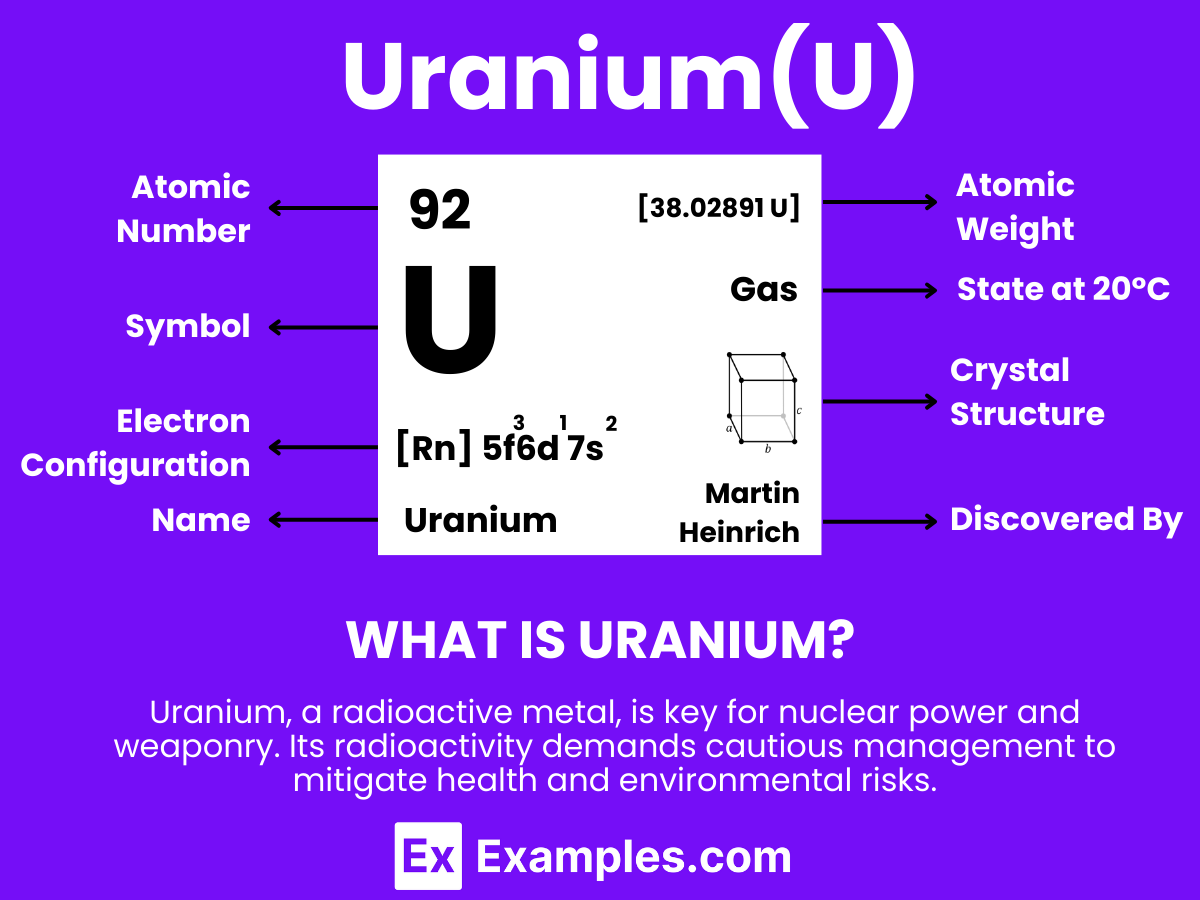
Klaproth carried out his 1789 experiments inside a modest Berlin laboratory, dissolving pitchblende, a mineral collected from the silver mines of Sankt Joachimsthal, in nitric acid before neutralizing it with potash. The resulting yellow precipitate convinced him that he had uncovered an entirely new elemental base. For nearly a century, industrial use remained largely aesthetic. Bohemian artisans added uranium oxides to glass mixtures, producing Vaseline glass that fluoresced a vivid canary-green under ambient ultraviolet light.
The true physical character of the element emerged only at the close of the nineteenth century. In 1896, French physicist Henri Becquerel left uranium salts atop wrapped photographic plates inside a dark desk drawer, inadvertently discovering spontaneous radioactive decay when the plates fogged without exposure to sunlight. Subsequent research by Marie and Pierre Curie isolated the daughter products decaying within raw uranium ores, revealing that uranium atoms slowly shed subatomic particles over immense spans of time. This decay cycle is governed by an extraordinarily long half-life: approximately 4.47 billion years for uranium-238 and 704 million years for uranium-235, timescales that match and exceed the geological lifespan of the Earth itself.
Marcus Vance is a cybersecurity auditor and technology writer dedicated to educating the public about online safety, data privacy regulations, enterprise security, and emerging cyber threats.
