Element with Symbol Sr Explained: Atomic Number, Properties, and Uses
 By Maya Lin-Takahashi
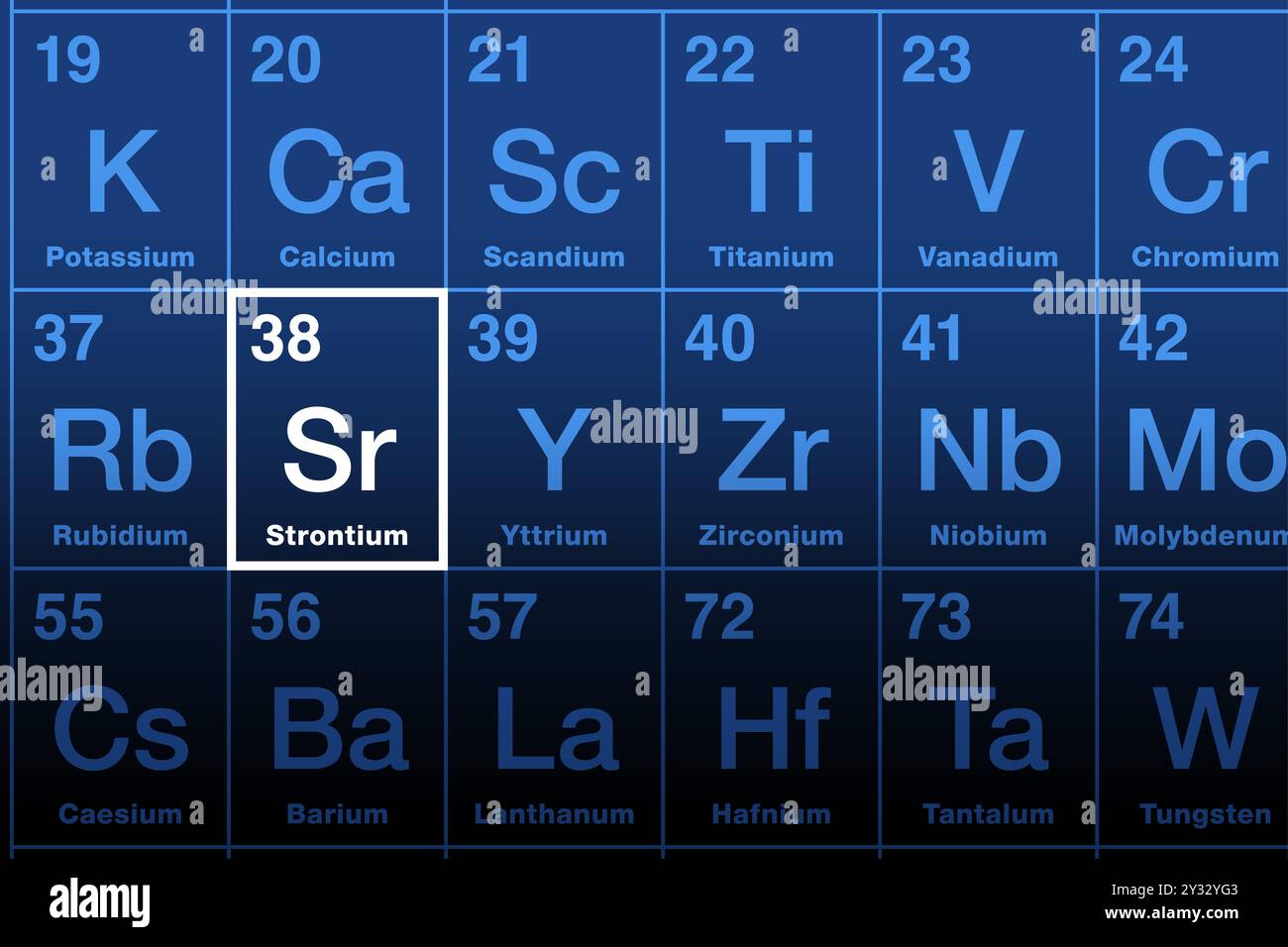
Strontium's biological behavior is shaped by its similarity to calcium. Because the ionic radius of Sr²⁺ (118 pm) closely mirrors that of Ca²⁺ (100 pm), human metabolic systems cannot easily differentiate between the two. Ingested strontium passes through intestinal walls, enters the bloodstream, and integrates directly into hydroxyapatite mineral matrices inside bones and teeth.
This biochemical mimicry proved tragic with the emergence of strontium-90, a major nuclear fission byproduct produced in atmospheric weapons tests during the 1950s and released during the Chernobyl disaster in 1986. Emitting potent 0.546 MeV beta particles with a half-life of 28.9 years, strontium-90 deposited on dairy pastures, contaminated milk supplies, and settled inside children's growing skeletal structures. Pathologists traced spiked rates of bone cancer and leukemia directly to its persistent beta irradiation of adjacent bone marrow. Public alarm over strontium-90 in baby teeth became a primary catalyst for the 1963 Partial Nuclear Test Ban Treaty.
Today, researchers use that same elemental identity for unprecedented measurement accuracy. Physicists at institutions like the National Institute of Standards and Technology (NIST) trap tens of thousands of neutral strontium atoms inside optical lattices formed by intersecting laser beams. By interrogating the transition frequency between quantum states in strontium-87 using ultra-stable lasers, these atomic clocks lose less than one second over astronomical timescales. Strontium has effectively transformed from a Cold War health hazard into the global benchmark for defining the future standard of the international second.
Maya is a hardware enthusiast who tests and reviews smart home devices, smartphones, wearables, and audio gear. She focuses on practical consumer value and build quality.
