Can Lcd Screens Actually Burn in? the Shocking Truth Behind Ghost Images
 By Alexander Ross
Hardware forums often mash three completely unrelated display flaws into a single catch-all term. Isolating your monitor's exact symptom determines whether you need a simple software fix or an immediate warranty exchange.
The first point of confusion centers on the ghosting effect. If moving high-contrast objects across a dark screen leave blurry trails or dark smearing that disappear the instant motion stops, your monitor is not suffering from retention. This artifact stems from pixel response time limitations. The liquid crystals simply cannot twist fast enough to match high frame rates, a common characteristic on older vertical alignment (VA) panels. Overdrive settings inside your monitor's firmware exist specifically to correct this issue by applying aggressive voltage spikes to speed up transitions.
The second distinct flaw involves stuck subpixels. A stuck pixel fix applies when an isolated dot glows permanently bright red, green, or blue against every background. This occurs when a single thin-film transistor locks permanently into an open state. It differs completely from a dead pixel, which receives no power and stays black. Stuck pixels do not produce full-scale ghost images of old workspaces; they appear as isolated micro-defects measuring a fraction of a millimeter across.
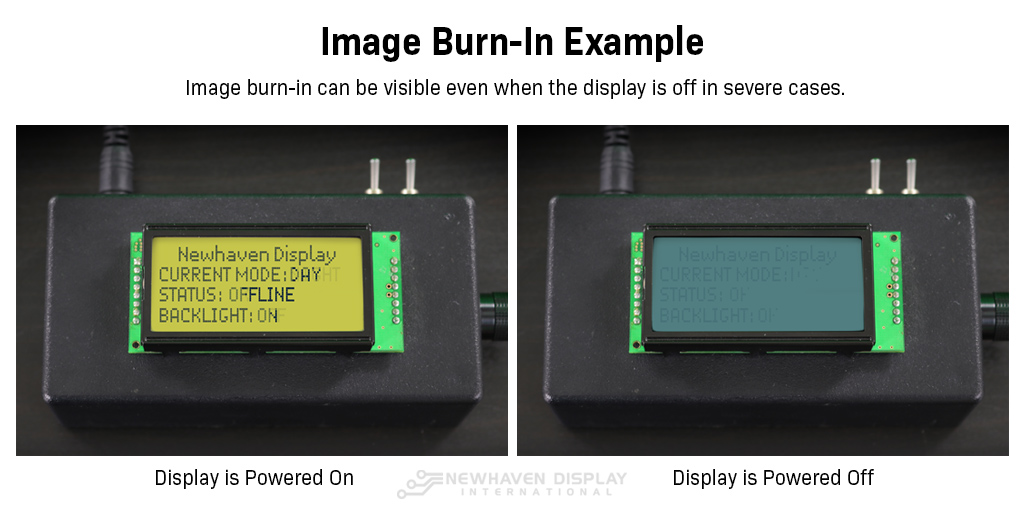
True image retention sits squarely between these mechanical extremes. It displays recognizable visual shapes, taskbars, browser navigation bars, watermarks, or spreadsheet columns, that linger for minutes or days after changing applications, most clearly visible against uniform gray or pastel backgrounds.
Alexander Ross has covered the video game industry for a decade, writing deep dives on game design, esports tournaments, VR developments, and gaming culture.
